
For a good month and a half now, we, Céline Kaiser and Falk Nessenius, have been working at Jimma University Medical Center in Jimma, Ethiopia, as part of the GoStar project. We were warmly welcomed by our Ethiopian colleagues and have moved into our quarters at the GoStar Guesthouse, where our housekeeper Negat takes care of our culinary needs.
For me, Falk Nessenius, senior physician in surgery, the start at the local hospital was good. We operated on our first patient on the very first day. However, the local conditions, especially with regard to operating room equipment and hygiene standards, were shocking to me. While in Switzerland, meticulous attention is paid to correct compliance with hygiene measures, here we saw assistant doctors at the operating table who were not quite so strict about sterility. The materials and instruments are also wrapped in cloths that are “sterile” in a way that would be unthinkable by Swiss standards. Accordingly, high infection rates after operations are also recorded in this country. This is partly due to the hygienic conditions in our ward, where eight patients share a room. The beds are old, the mattresses worn and dirty. Fifty patients share a single toilet. Our first goal was therefore to improve hygiene measures. We instructed surgical staff and assistant doctors on how to wear protective clothing correctly. The nursing staff on the ward were shown how to apply wound dressings correctly. Another milestone will be the move to the new ward in November this year. The new building meets almost European standards and gives hope for better patient care.
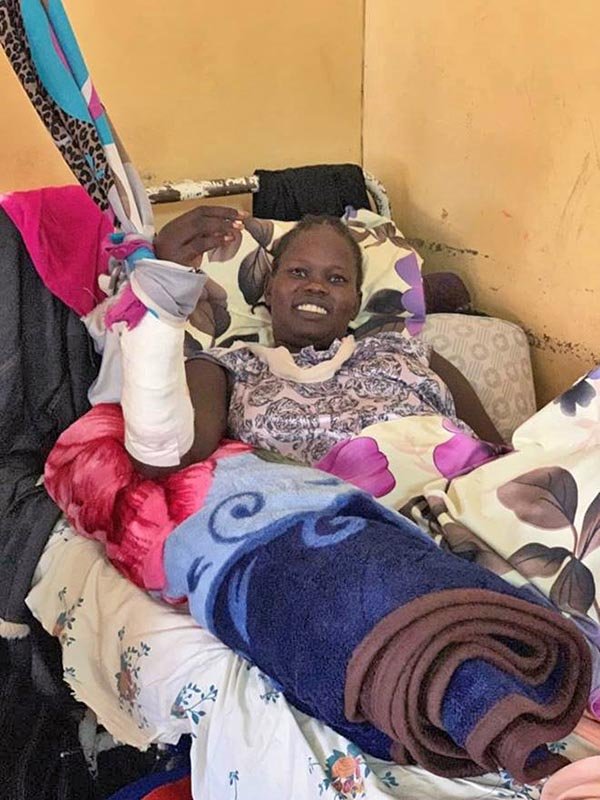
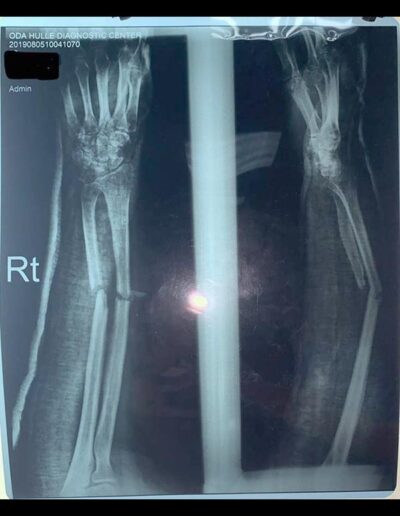
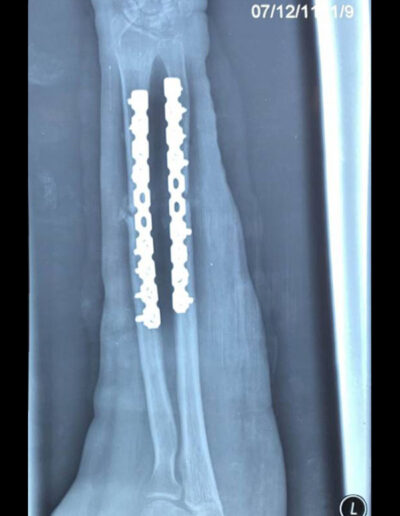
As a positive example, we would like to mention the case of 27-year-old Nabile. Six months ago, the patient suffered a forearm fracture in a car accident, which was treated in another hospital by plating the ulna and radius. Unfortunately, the material was removed far too early, a good five months later. The bone had not yet healed and a nonunion, as we call it, developed in the area of the fracture. This means that the bone at the fracture site does not have stable contact between the individual fragments and is therefore mobile and flexible, like a joint. This caused the young mother considerable pain and severely limited her ability to function as a mother of three small children. She therefore sought our help and came to our consultation hour. We agreed on surgical correction with implantation of bone material in the defect zone, which was taken from the patient's iliac crest during the same operation. We were able to perform the procedure on August 12, 2019. The X-ray now shows correct restoration of the two forearm bones with stabilizing bridging by two plates. After the operation, Céline began exercising the nearby joints through mobilization and provided instruction on self-therapy and correct positioning as part of daily physical therapy. The patient was extremely satisfied and grateful and, with our help, will be able to resume her duties as a mother and housewife. This case encourages us to continue our work here despite difficult conditions and to help people in need.
Swiss surgeons in Ehtiopia
c/o Luzerner Kantonsspital
Spitalstrasse 16
CH-6000 Luzern
IBAN CH62 0900 0000 6033 4455 9