
Questions about the costs and schedule for the expansion and renovation of the Lucerne Cantonal Hospital (Luks) become insignificant when it comes to the state of hospitals in Africa. This is also the case in Ethiopia. The Swiss Surgeons in Ethiopia Foundation has been providing healthcare there since 2009.
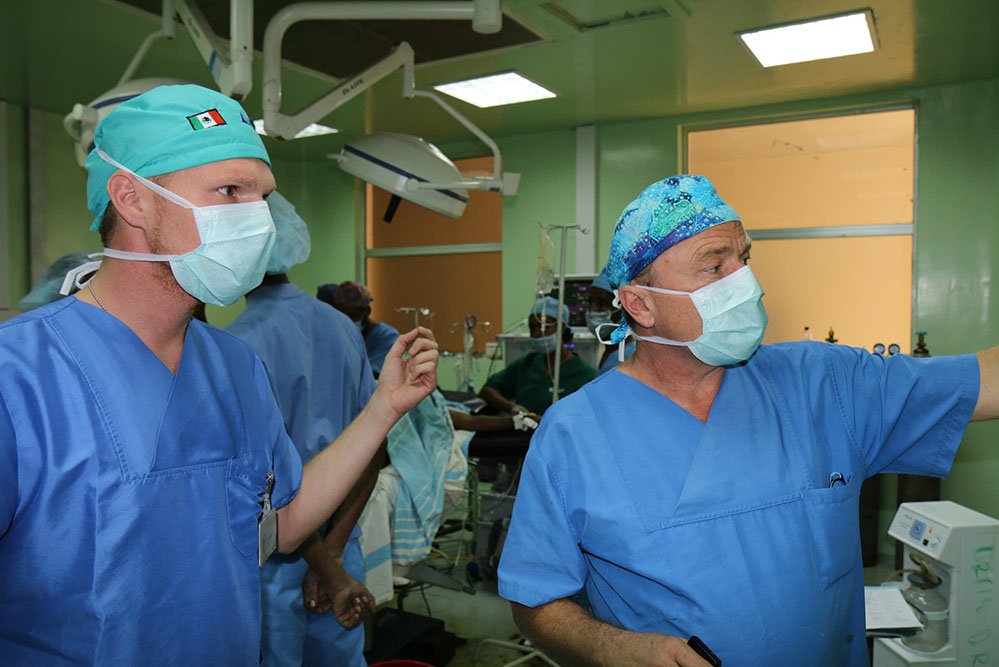
The foundation has its office in Lucerne and works at the University Hospital of Jimma, around 350 kilometers southwest of Addis Ababa, in trauma surgery, in the procurement of modern surgical equipment, and in training.
A foundation has been supporting the University Hospital in Jimma for ten years. Knowledge and personnel come from Lucerne.
At the moment, the hospital in Jimma is pretty much in Lucerne's hands. Since the end of June and continuing until October, Falk Nessenius, senior physician at Luks, and Céline Kaiser, physiotherapist at the Physio- und Sport-Arena in Emmenbrücke, have been working to help the poorest, which is demanding not only physically but also mentally. Nessenius speaks for both of them when he says: “The city of Jimma – that is pure poverty. When we were in the hospital for the first time, I was overcome by a slight shudder. Very intense smells of bodily fluids and sweat, and hygienic conditions in the operating room that were unimaginable for us Europeans. An overcrowded ward with patients, some of whom were lying on the floor.”
The main problems lie in hygiene
And what is the situation now, almost two months later? “The main problems,” says Nessenius, “still lie in hygiene. I explain practically every day how to protect yourself and, above all, patients from germs, but many measures that we take for granted are difficult for the locals to adapt to.” Falk Nessenius and his Ethiopian colleagues operate on three to five patients a day, mostly victims of traffic accidents or violent crimes, with open fractures of the thigh and lower leg, machete wounds, and gunshot wounds. Céline Kaiser sees between 5 and 15 patients a day. “The most important thing,” she says, “is to make it clear to people that even after recent surgery, they should put appropriate weight on the injured tissue, usually by moving their joints. In addition, we instruct them on exercises they can do on their own and teach them how to walk with crutches.”
The two Lucerne residents have different answers to the question of whether they would be willing to participate in such a mission again. Céline Kaiser: “When I think of the immense gratitude of the patients and the social network I have built up in the meantime, I can say: Yes, I would do it again.” Falk Nessenius takes a slightly more nuanced view: "I think I would commit to a shorter period of time next time.
The situation here, far away from relatives and friends, is very stressful.“ Nessenius continues: ”You often see young children with advanced tumors; even with surgery, death is inevitable in the near future. The laughter and joy of the patients during rounds motivate us to keep going.
“
Jörg Peltzer, chief surgeon in Delémont, was behind the project from the start. In 1999, Peltzer worked as a senior physician for Karlheinz Böhm's Ethiopian aid organization ”Menschen für Menschen" (People for People). Seven years later, he started his own trauma surgery project in Jimma.
He financed the costly project with his own sponsors in Switzerland, and since 2009 through the foundation and a two-week bike tour through Ethiopia, which will take place for the third time in November and raises around CHF 800,000 in donations from participants.
The “Swiss Surgeons in Ethiopia” foundation is not only based in Lucerne. The vice president of the foundation's board is Professor Reto Babst, who was head of the Clinic for Orthopedics and Trauma Surgery and head of the Department of Surgery at Lucerne Cantonal Hospital for many years. Babst retired at the end of May and, although he is still very active, now has more time for Ethiopia. His main task is to implement a memorandum agreed between the foundation and the hospital: better conditions in a new hospital wing for medical staff and a separate ward for patients.
Questions about the costs and schedule for the expansion and renovation of the Lucerne Cantonal Hospital (Luks) become insignificant when it comes to the state of hospitals in Africa. This is also the case in Ethiopia. The Swiss Surgeons in Ethiopia Foundation has been providing healthcare there since 2009.
Swiss surgeons in Ehtiopia
c/o Luzerner Kantonsspital
Spitalstrasse 16
CH-6000 Luzern
IBAN CH62 0900 0000 6033 4455 9